Psalms for the Election – Day 3

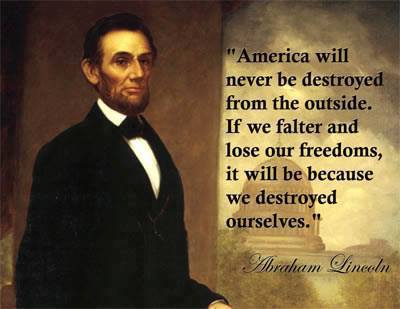
abraham-lincoln-quote-about-americas-destruction

This year has brought us one of the most divisive elective cycles in recent memory. Many people that I speak to, regardless of political affiliation, are not excited about the choices they have for President. Both candidates have characteristics that could be defined as “unfit,” whether it is in temperament, decision making, morality, unpredictability, criminal behavior, experience, judgment, health, or political vision.  It is in this season that we need to pray for our country more than we do for our political parties. We are a nation off-course and the choice of our leader will make irrevocable changes to the intellectual, emotional, spiritual, and moral direction we take as Americans.

Therefore, I would like to invite you to pray with me for our country. Over the next 7 days, I will be making a new post each day. Each post will include a link to a reading from the Psalms and a brief instruction on how to use this reading as a guide for prayer. Let us put aside our desire to see a specific person win the election and have the courage to pray boldly for God to place in office the man or woman who will lead us to be the country that God desires (and designed) us to be. 

Will you please pray with me?


Read Psalm 38

Identify what God is saying about Himself in this passage. Boil it down into a one or two-word summary (e.g., God is ____ ) and confess that truth back to God, asking Him to reveal Himself in this way through your day and this election cycle.

This may be a particularly difficult chapter to read and pray, especially in the context of the election and the sins of our nation. Please take a moment to ask the Holy Spirit to give you ears that can hear His voice and to soften your heart to what needs to be prayed. If you have never prayed for your nation before, please read Nehemiah 1:5-11. This should provide an example of what needs to be done today. Also, if you need help understanding the difference between iniquity, trespasses, and sins, please read my previous post Iniquity, Trespasses, and Sin.

v. 1-2 Consider how far we have strayed from the LORD as a nation. What grieves you? What feels like arrows have sunk into you when you consider it? Name these things one by one. Ask the LORD to not rebuke us in anger nor discipline us in wrath for these things.

v.3-4 Confess how far we have missed the mark as a country and as a culture.  Admit that we deserve God’s judgment for these things and how we are wasting away. Specify how the health in the bones of this nation is depleted because of our sin.

Confess the condition of our hearts (our iniquities) and how they weigh us down like a heavy burden that is too heavy for us.

v. 5-8 Contemplate how, because they have remained untreated, our nation’s sins have affected us. How infected have our wounds become? Confess the foolishness of America and the anguish it brings to your heart. Allow God to hear your mourning.

v. 9-14 Lay out your longings before God. Come boldly before His throne of grace and ask the desire of your heart for our nation. Outline how our sins have not only hurt us domestically but also internationally. How now our “friends and companions stand aloof…and my nearest kin far off.” How “those who seek my life lay their snares; those who seek my hurt speak of ruin and meditate treachery all day long.” And how our response is “like a deaf man; I do not hear, like a mute man who does not open his mouth. I have become like a man who does not hear and in whose mouth are no rebukes.”

v .15-17 Confess that we are waiting for the LORD. How we know that only the LORD is our answer! Ask Him to hold us up when our foot slips on the path of recovery and that our enemies will not mock us, which may cause discouragement and relapse. Rather, may they see God working through our country, through our leaders, and through our people so that we may not fall, even in the midst of our national pain.

v.18-22 Confess the condition of our hearts as a people. Ask for forgiveness for our sins. Ask God to protect us, despite how numerous our foes may be and how others may render us evil because we follow after good.

Ask God to not forsake us but to redeem us! Ask Him to give us the fulfillment of His promises. To come quickly to help us. To keep us from destroying ourselves and losing the precious freedoms with which He has blessed us. To be our LORD and our salvation!

Psalms for the Election – Day 2

quote-to-those-who-cite-the-first-amendment-as-reason-for-excluding-god-from-more-and-more-ronald-reagan-55-97-14

This year has brought us one of the most divisive elective cycles in recent memory. Many people that I speak to, regardless of political affiliation, are not excited about the choices they have for President. Both candidates have characteristics that could be defined as “unfit,” whether it is in temperament, decision making, morality, unpredictability, criminal behavior, experience, judgment, health, or political vision.  It is in this season that we need to pray for our country more than we do for our political parties. We are a nation off-course and the choice of our leader will make irrevocable changes to the intellectual, emotional, spiritual, and moral direction we take as Americans.

Therefore, I would like to invite you to pray with me for our country. Over the next 7 days, I will be making a new post each day. Each post will include a link to a reading from the Psalms and a brief instruction on how to use this reading as a guide for prayer. Let us put aside our desire to see a specific person win the election and have the courage to pray boldly for God to stay his judgment and place in office the man or woman who will lead us to be the country that God desires (and designed) us to be. 

Will you please pray with me?


Read Psalm 37:27-40

Identify what God is saying about Himself in this passage. Boil it down into a one or two-word summary (e.g., God is ______ ) and confess that truth back to God, asking Him to reveal Himself in this way through your day and this election cycle.

v. 27-29 Ask God to give you, our nation, and our nominees a heart for good and not evil. May evil be repulsive to our souls and justice a delight. Ask that we will be a people filled with righteousness so that we may never lose our land but will inherit it and dwell upon it forever. Ask that we will not fall victim to government tyranny but that we will retain the precious freedoms with which God has provided us.

v. 30-31 Ask God to give us more than intuition in this election. Ask Him to give us wisdom and the ability to articulate it to others. May our tongue speak justice, so that truth abounds in the marketplace as well as on the ballot. Ask God to keep His law within our hearts so that we do not slip, either in our daily lives or in the electoral booth.

v. 32-34 Confess that “the wicked watches for the righteous and seek to put him to death” and that we are easy prey if God abandons us. Ask that God will express His power on behalf of the righteous and that He will not allow false accusations to condemn them. But may the righteous “wait for the LORD and keep His way” while the wicked are cut off.

v. 35-40 Rejoice that God does not permit a wicked, ruthless person to endure but instead, He upholds the blameless and the upright. Ask God to make us a people of peace and to give us a future while the those who seek to turn us away from Him and His ways are “altogether destroyed.” Praise Him that our salvation does not come from a Republican or a Democrat but from the LORD. Ask Him to help us in this election cycle and to deliver us; deliver us from the wicked and save us because we take refuge in God.

Thank Him for hearing and answering these prayers.

In Jesus’ name, Amen.

Psalms for the Election – Day 1

img_3519

This year has brought us one of the most divisive elective cycles in recent memory. Many people that I speak to, regardless of political affiliation, are not excited about the choices they have for President. Both candidates have characteristics that could be defined as “unfit,” whether it is in temperament, decision making, morality, unpredictability, criminal behavior, experience, judgment, health, or political vision.  It is in this season that we need to pray for our country more than we do for our political parties. We are a nation off-course and the choice of our leader will make irrevocable changes to the intellectual, emotional, spiritual, and moral direction we take as Americans.

Therefore, I would like to invite you to pray with me for our country. Over the next 7 days, I will be making a new post each day. Each post will include a link to a reading from the Psalms and a brief instruction on how to use this reading as a guide for prayer. Let us put aside our desire to see a specific person win the election and have the courage to pray boldly for God to stay his judgment and not give us a wicked ruler. Instead, may He place in office the man or woman who will lead us to be the country that God desires (and designed) us to be. 

Will you please pray with me?


Read Psalm 37:1-11

Identify what God is saying about Himself in this passage. Boil it down into a one or two-word summary (e.g., God is ____ ) and confess that truth back to God, asking Him to reveal Himself in this way through your day and this election cycle. For example, “God, Your word says that You are ______. Sometimes it is hard to see you this way, especially with all the distractions of life, so I pray that You will reveal Yourself in this way in my life today and for this country during this election.”

v.1-2: Confess your worry over this election and how you fear it may damage our country. Acknowledge that God is in control more than man and your intent is to place your trust in His will.

Confess that it often seems like evil people prosper. Ask that in this election the wicked will “fade like the grass and wither  like the green herb.”

v.3-4: Dedicate yourself to the LORD. Acknowledge that you are placing your trust in Him. Ask Him to show you how you can demonstrate each day that your faith is in Him, not in a political party or a person representing that party, to heal our country.

Commit yourself to doing good each day. Ask the Holy Spirit to reveal to you where your definition of “good” and God’s definition of “good” separates. Ask Him to produce the change within you that needs to be made so that you may live your life as defined by God’s worldview as revealed in scripture.

Ask God to shield this country from wickedness so that you may dwell in it and feed on faithfulness. Ask God to give you and the people of our nation the desires of His heart so that His purposes may be fulfilled.

v. 5-6: Rejoice that you have an active and an acting God. Ask Him to “bring forth your righteousness as the light and your justice as the noonday.”

v.7-9: Take a moment and be still. Let at least 20 seconds pass by in silence. Confess how hard it can be to be still before the LORD and why. Ask Him to give you the strength and the ability to wait patiently for Him, because you know this is another expression of putting your trust in Him.

Ask Him to give you peace, because you know that God is in control, not “the man who carries out evil devices!”

Ask God to keep you from anger and wrath! To shed your worry about this election because it tends only to evil. Ask that God will keep you and all Americans from becoming “evildoers” so that we are not cut off from Him. But may we all be those who wait for the LORD and inherit the land.

v.10-11: Give thanks that “in just a little while, the wicked will be no more;” that “though you look carefully at his place, he will not be there.” Not because man has triumphed in this election but because God has. Ask for meekness and the delight of abundant peace.

Thank Him for hearing your prayers and for answering them. In Jesus’ name, Amen.

Quick Thoughts: Delight Yourself in the Lord

bd8c_istubz_iphone_sync_charge_cable_inuse

Trust in the Lord, and do good;
    dwell in the land and befriend faithfulness.[b]
Delight yourself in the Lord,
    and he will give you the desires of your heart. (Psalm 37:3-4)


If you have been in church or around the Bible for any season, this verse has probably popped out at you at some point. On the surface, it sounds like a man-centered verse. It almost has the nasal ring of a carnival ringmaster crying out to the crowd, “Step right up! Step right up! Get the desires of your heart today! Do you want money? A promotion? A better marriage? You can have anything your heart desires! Just delight yourself in the Lord and you can have it all!”

Of course, this interpretation of the verse is all poppycock. It is not about me getting a new car or having my team win the World Series or, on  a more serious note, having an addiction suddenly removed from me.

Rather, the focus of the verse is about getting the desires of your heart correct. To begin with, the Bible tells us that “The heart is deceitful above all things, and desperately sick; who can understand it?” (Jeremiah 17:9) And it continually instructs us to cleanse our hearts, to lay aside selfishness, worry, and “the sin that so easily entangles.” Pursuing the desires of a sick heart is not the goal of a holy God. He wants to correct the desires first and then fulfill the desires of the new heart.

But how do we do that?

Well, think of yourself as an iPhone and God as your iTunes account. You have some of the songs on your iTunes already added to your phone, but not all of them. For what you have, it works…mostly. But it is not a good copy of the master version on your desktop. If you want your phone to have everything that resides on your master version, the only way to get them is to sync your phone up to the computer. So, you plug in your USB to your phone and to the computer, and voila! You now have your songs. This is similar to what God is telling us to do in verses 3 and 4 here. When the psalmist writes, “Trust in the Lord, and do good; dwell in the land and befriend faithfulness,” he is telling us to “sync” our heart with God’s. That the way to get the Master’s version to overwrite our current heart is to:

  1. Trust in the Lord (not in yourself.) Remember, trusting in yourself got you into this mess. Trusting yourself won’t get you out of it.
  2. Do good. – This means to do the right and ethical thing according to God’s law/standards. We like to think that we are a law unto ourselves (“Well, that may be true for you, but not for me.”) But when we live according to God’s standards, a change begins to occur in us that transcends even the rule of self.
  3. Dwell in the land – Don’t just vacation in God’s land. Live there. He has reserved a specific place for our hearts to live and if we will make it our residence, we will find the fruit is sweeter and the victories are sure.
  4. Befriend faithfulness – Another way of translating this, is “feed on faithfulness.” Let faithfulness be your nourishment.  The safe pasture that strengthens your whole being.  Don’t be flaky or wishy-washy. Stand firm. Be strong and courageous. But be faithful to what/whom? Faithfulness to God and His ways. Do  not waver from His principles, but allow it to guide your decisions and the way you interact with others.

Thus, when he says, “Delight yourself in the Lord” in verse 4, he is merely summarizing the four points listed above. In this light, the words “And he will give you the desires of your heart” become not a prescriptive statement, such as “if you do A, you will get B.” Rather, it becomes a descriptive statement, such as “when you do A, you will have B.” The focus, then, is not on the getting but on the becoming. It is about God changing your desires to mirror His own, so that now, together, you and He can pursue the same desires.

Sync your heart up to God’s. Trust in Him. Do good. Dwell in the land. Feed on faithfulness. Then your desires will be like His. And you will have the desires of your heart.

Iniquity, Trespasses, and Sin

turn_away3

A week ago my pastor sent out a church-wide email to follow up on some key points from his sermon. I found the points helpful (since I couldn’t write fast enough to keep up with his definitions) and thought-provoking. Below is a copy of the email followed by a few thoughts of my own. I hope you find this helpful in your personal walk with Christ.


Follow up from Sunday sermon…
Beloved,

Sometimes when I preach I get going and it’s hard to write down everything you want to write down.  I’m actually trying to get better at my pace but the Bible excites me so sometimes I get carried away.  This past Sunday I was talking about the difference between iniquity, transgression and sin and some of you have asked about those descriptions so I thought I’d send them out with a little more unpacking around each one.

As I said on Sunday, when the Bible refers to iniquity, transgression and sin these are not three different words for the same thing.  Each one refers to a specific posture of the heart towards sin.  Here is some more granularity around what was shared on Sunday.

1. iniquity– this refers to a more deeply rooted posture of the heart, has to do with premeditated choice, iniquity continuing in sin without repentance.  Iniquity left unchecked leads to a state of willful sin with no fear of God.  Iniquity is bending or twisting of the law of God in our hearts and heads long before it expresses itself in our hands.

2. transgression– refers to presumptuous sin, the choice to intentionally disobey; willful trespassing.  Examples of this are when we run a stop sign or red light or blatantly disregard an authority.  We didn’t plan on it before hand but in the moment we “just did it.”

3. sin– literally means “to miss the mark,” doing wrong against God or a person, also includes failing to do what you know is right.  Some people refer to sins of commission and sins of omission.  Sins of commission are things that we’ve done that were wrong while sins of omission are not doing the right things we should have done.

Knowing the difference helps inform the way we pray for ourselves and those we love.  It also reminds us to honestly assess what is deep in our hearts.

Thanks for thinking and for asking,

Neil


This was an interesting distinction for me, especially since the day after this email I read this verse:

I acknowledged my sin to you, and I did not cover my iniquity; I said, “I will confess my transgressions to the Lord,” and you forgave the iniquity of my sin.

Psalm 32:5 (ESV)

Entering the above definitions helped clarify what David was trying to say. Rewritten it may sound more like this (definitions placed in brackets and bolded):

I acknowedge [the way I had missed the mark] to you, and I did not cover [the way I had willfully twisted the law of God in my heart]; I said, “I will confess my [willful and intentional choices to disobey] to the Lord,” and you forgave [the deeply rooted posture of my heart that causes me to fail in doing what’s right.] 

Looking at the verse in this way, I began to realize how much Christ had forgiven me for on the cross. His sacrifice did not merely cover poor behaviors or inappropriate choices. Rather, he forgave me for posturing my heart towards Him in such a way that I twisted the truth of His law to fit my needs. All of the ways I explained to myself or others that it was okay for me to do a certain behavior or make a specific choice because this was a “special situation” or “extenuating circumstance.” How I rationalized that God’s love excused my willful disobedience, or how I insisted that even though I may have missed the mark, I didn’t miss it by that much. After all, I’m only human. Right?

This type of forgiveness is on a whole different level than merely excusing bad behavior. This forgiveness helps us examine the deep things beneath the flower and the soil that give our dark hearts life and the power to pull it up by the root. It is not enough to modify what we do. We have tried that throughout the years and every time our willpower has failed. This forgiveness gives us the power to do this specifically because it is NOT our power. It comes from God, the One who spoke and created order out of chaos. When Christ forgives, He transforms the entire man, beginning with the nature of the heart and rippling outward into actionable steps that make sense to the new mind and heart. He does not just set our feet in the right direction and hopes we make right choices thereafter. He changes us. He works on us. He directs us.


Iniquity, trespasses, and sin. They are not the same thing. But the blood of Christ covers them all and empowers us to live as an authentic testimony to the world of the change forgiveness can bring.

Quick Thoughts: “You are my God.”

5107569575_8e95030273

But I trust in you, LORD; I say, “You are my God.”

— Psalm 31:14

Have you ever thought about this phrase? What does it mean to declare that something or someone is your God?

According to Psalm 31, here are some answers below (corresponding verse in parentheses).

To say, “You are my God” means:

  1. You trust in this person/thing to deliver you out of difficult situations. It is the refuge that you run into for shelter when life is beating you up. (verse 1).
  2. You rely on it to be attentive to your needs, to be quick and effective in the salvation you seek. (verse 2)
  3. You seek wisdom and guidance from it about how to make sense out of your chaotic life. (verse 3)
  4. It is that thing that you seek to glorify with your life, that which you are willing to give the credit for your successes, instead of yourself. (verse 3)
  5. You rely on this person/thing for not only protecting you from present troubles but also future ones. (verse 4)
  6. All that your god embodies is honorable and true to you. Those that contradict your god, you abhor. (verse 6)
  7. You feel that your god understands you and you rejoice in the intimacy you have with it. (verse 7)
  8. You trust in this god to not only deliver you but to also expand your territory so that you have freedom to roam. (verse 8)
  9. You rely on it during times of grief, anguish, suffering, and affliction. When you are at your weakest and an utter derision to all around you, you still cling to this god to keep you from shame. (verse 9-17)
  10. You seek vengeance through it, to give you the justice you cannot get on your own. (verses 18, 23)
  11. You view it as the source of good things and a rewarder of those who are faithful to it. (verse 19)
  12. You trust it to protect you from harassment, physical harm, emotional pain, and hopelessness. (verse 12, 20-22)
  13. You rely on it to give you strength and hope. (verse 24)
  14. You find your resilience grows out of its character and presence in your life. (verse 24)
  15. You decide to surrender your life to its influence and control, to be “true” to it because you believe you cannot manage your life without it. (verse 23)

Let’s be honest. Gods can take many forms. Your god may be money, intelligence, alcohol, sex, food, work, humor, praise from others, self-harm, rationalizations, justifications, learning/reading, social media, depression, Netflix, busy-work, or the many-headed hydra of have to’s that plague us from day to day.

OR…your god may be religion, doctrine, good works, volunteering, going the extra mile for someone in need, false humility, presenting the “perfect picture”to outsiders, guilt, praying (instead of doing), doubt, materialism/shopping, or the unending list of do’s and don’ts that echo daily through our head.

Or it may be something else entirely.

But whatever you proclaim to be your god (even if you do not believe in the supernatural and claim yourself as your highest authority) will eventually be measured. Not by the standard of how well it meets your selfish ends, but by the strength of its character while under duress.

You may pick your god. That is your right. But be careful what you dedicate your life to. Most gods break when tested, for they are full of impurities and their promises are made of thin plastic. That is why you still feel hopeless. That is why there is a longing in your heart for something (ANYTHING!) to be real. For in those times that you see your god for all it truly is, you realize that all you have ever worshiped is a mere facsimile of the original and one, true God. Only He has the integrity to withstand the tests that attack Him and to deliver you from harm as well.

You must decide. To what, or whom, will you say: “You are my God.”

Sitting on the Stool

stool

“There are two spiritual activities which are to be unceasingly part of a believer’s life, two great pillars that hold up the believer in the matter of daily living.  One is the study of the Word of God.  Two, prayer.”

— John MacArthur

I’m not one to usually criticize John MacArthur, who some would argue is the best exegetical preacher alive today, but when I was listening to his sermon “The Paternity of Prayer” on my way to work the other day, the above quote popped out at me.

Immediately, I thought: Wait a minute. What about service?

I do not disagree that study and prayer are two essential aspects of the Christian life, but if we forget or minimize the necessity of service, we fail to put legs to what our study and praying have revealed. This is why I have often thought of Christianity like a three-legged stool that must continually be in balance, where one leg is study, one is prayer, and one is service.

You cannot neglect one or two of these legs without toppling over. For instance, a person that is great at study but does not pray, he only has head knowledge and can get filled up with the arrogance of much learning. Or if he has a passion for prayer so as to see great miracles occur but does not study or serve, he will not produce anything meaningful. This is why Solomon warns us:

“Of making many books there is no end, and much study is a weariness of the flesh. The end of the matter; all has been heard. Fear God and keep his commandments, for this is the whole duty of man. For God will bring every deed into judgment, with every secret thing, whether good or evil.” (Ecc. 12:12-14)

And it is why Paul says:

“And if I have prophetic powers, and understand all mysteries and all knowledge, and if I have all faith, so as to remove mountains, but have not love, I am nothing.” (1 Cor 13:2)

In both situations, Solomon and Paul emphasize that the most important thing is not knowledge or faith by itself, but it is adding both of these things to what you do. As Paul later wrote in Galatians 5:6: “The only thing that counts is faith expressing itself through love.” (NIV)

Service, then, is a necessary leg of the Christian existence. If it was not, James would not have argued that it is our deeds that prove our faith (Ja. 2:17-18) Jesus would not have said, “By this everyone will know that you are my disciples, if you love one another.” (Jn. 13:35) And the disciples in Acts would not have delegated the work of distributing food to the widows to seven godly men so that The 12 would not neglect “prayer and the ministry of the Word.” (Acts 6:1-4)

I understand that it is safer to remain in one’s study, surrounded by books and excavating truths never before understood. I respect that it feels more comfortable, and at times it feels more spiritual, to pray for a person or a situation, rather than get involved. But God calls us out of our safe places and asks us to leave our comfort zones. This is why Jesus tells us “you will be my witnesses in Jerusalem, and in all Judea and Samaria, and to the ends of the earth.” (Acts 1:8) Because we are to be a going people. We are to be an engaging people. We are revolutionaries who are on a mission to change the culture of our homes, communities, and nations. We are a people who are to serve “by the strength that God supplies—in order that in everything God may be glorified through Jesus Christ.” (1 Peter 4:11)

We are not to be cowardly or sluggish or foolish. Those are mistakes the anxious. We are not to be arrogant, doubting, or disbelieving. Those are the mistakes of the inactive. We are to be doing, going, and serving. Giving our bodies up as living sacrifices (Rom. 12:1), which is “your spiritual worship” (or, “your rational service“).

Neglect not this third leg of Christianity. It is where you get to see the truth you’ve studied in action, and where you witness your prayers become weapons of warfare. It is where you are allowed to join the holy, sovereign, creating God in the redemptive work He is doing. To reject such an honor is disrespectful. To refuse such a privilege is unthinkable. No man is remembered who does not add service to his study and prayer.

Burn the Ships

netherlands_ship_bu_226863c1

In 1518, Cortez sailed from Spain with 11 ships carrying 500 soldiers and 100 sailors. The goal was to conquer the Aztecs of Mexico. But when they landed on the Mexican coast in 1519, the indigenous people far outnumbered Cortez and his crew. Fear set in for many and some of the men developed a secret plot to retreat to Cuba. It was safer there and they could wait for reinforcements.

But when Cortez learned of this treachery, he refused to listen to the plan of retreat. Instead, he did the one thing that no one would have expected him to do. He ordered his men to burn the ships. “The only way we will leave this land,” he told his men, “is in death!”

Incredibly, the men rallied behind their commander and conquered the Aztecs’ empire, which had been around for over 600 years.

How did they do it?

Simple. They burned all of their avenues of retreat, leaving themselves only one direction in which to move — forward.

Think about that for a moment.

When you take the time to look at your “have to” list or when you sit down to begin tackling your impossible dreams, what avenues of retreat do you permit yourself? Social media? Alcohol? Hanging out with friends? Netflix? Menial chores? Self-beratement?

OR…Maybe you are more clever than that.

Maybe, as you attempt to move your desire into an actionable plan, you provide yourself with the following avenues of retreat:

  1. Disguise: Don’t tell the truth
  2. Avoid the truth: Tap dance
  3. Answer questions with questions
  4. Keep people off track
  5. Keep the B.S. going
  6. Let someone else do all the work
  7. Don’t take responsibility
  8. Blame someone or something else
  9. Keep the attention off of yourself
  10. Keep everyone else in an uproar!
  11. Scatter birdseed, i.e. lead them on a wild goose chase!
  12. Consider yourself special, get into cliques or sub-groups
  13. Focus on a member of the opposite sex instead of what you should be doing
  14. Don’t do anything extra. Do ONLY what you HAVE to do.
  15. Tell others what they want to hear and look sincere.
  16. Change the subject when your dreams/goals are brought up.
  17. Trust no one! Never let down your guard.
  18. Focus on rescuing someone else from their mistakes, failures, etc.
  19. Convince yourself that you don’t need anyone’s help.
  20. Quit…and take someone with you, if you can manage it. (Misery loves company)
  21. Focus on what’s happening in the world
  22. Isolate yourself. Avoid sharing with others
  23. Gripe and complain about everything
  24. Don’t help others, let them fend for themselves.
  25. Build resentments and hang onto them for a long time.
  26. Stay in your head. Don’t let yourself get in touch with your feelings.
  27. Get angry. It throws others off balance.

Or maybe you use one of the following words to weasel out of actually doing anything at all:

  • I don’t know
  • I don’t remember
  • I’ll try
  • You’re picking on me
  • I don’t see how
  • Anyway…
  • Huh?
  • Sorta
  • But
  • If I can
  • I can’t
  • As I can
  • It’s too hard
  • I guess so
  • More or less
  • Maybe
  • Sometimes.¹

Now, take a moment. Go back over the list and ask yourself which of these avenues of retreat sound like you? What practical steps would it take for you to burn these ships?

Don’t just list these ideas in your head.

Write it down.

Make it real.

What would happen if you destroyed ALL of the avenues of retreat in your life so that only ONE path was open to you: the path forward?

What dreams could you begin to accomplish? What goals would you have stripped of the word “impossible?” What excuses would no longer be available? What dreams would you have forced out of your head to become a reality in the world around you? What impact would you make not only in your life but also on those who came in contact with your realized ambitions? What would you be able to do if you honestly assessed your life and decided, right now, to lay the torch to the deck and burned the ships?


 (¹Taken from a handout entitled “How to Slide Through Treatment and Stay Sick.” Author Unknown)

Quick Thoughts: God is One

one_cube-image

Dt. 6:4 – The LORD our God, the LORD is one

Isa 45:7 – I form the light and create darkness,
    I bring prosperity and create disaster;
    I, the Lord, do all these things.

1st Jn 4:8 – “God is love.” We hear this quoted all the time. Sometimes from a person who is trying to justify their behavior to us and sometimes from ourselves. But is God only love? Is He not also Creator, Provider, Sustainer, Judge,Redeemer, Forgiver, Covenant maker, Faithful, the Truth, the Way, the Life, etc?  When we talk about God, when we use the term “the LORD” or “God” do we not reference ALL of who He is? True, God is Love, but God is more than that.  Don’t get hung up on only one characteristic of God to the exclusion of the others. Otherwise, you will not only have an inaccurate view of God but you will also expect God to behave according to your definition of who He is, instead of you adjusting yourself to the reality of His person. Remember, God is one. He is the God who creates both prosperity and disaster (Isa 45:7). He is not separate from the sufferings we endure. Indeed, His love does not prohibit Him from understanding or from creating our calamity. He is sovereign and in control of it all. To some people, this seems like a cosmic sadist is at work, while others would argue that it is unloving to “create calamity.” But is it? A loving parent will often allow natural consequences to reveal truths to their child which promote growth or wisdom or they will implement logical consequences to teach a child. Similarly, God in His providential wisdom does not absolve us from suffering. He uses it in perfect symmetry with His other characteristics so that no part of Himself is separate from another. God is ONE. We cannot worship only the aspects of God that we like or that appeal to our sensibilities. We must worship all of the oneness of God in order to understand Him as the God that is in control of it all.

Quick Thoughts: Repair Your Gate

And Shallum the son of Col-hozeh, ruler of the district of Mizpah, repaired the Fountain Gate. He rebuilt it and covered it and set its doors, its bolts, and its bars. And he built the wall of the Pool of Shelah of the king’s garden, as far as the stairs that go down from the city of David.16 After him Nehemiah the son of Azbuk, ruler of half the district of Beth-zur, repaired to a point opposite the tombs of David, as far as the artificial pool, and as far as the house of the mighty men. 17 After him the Levites repaired: Rehum the son of Bani. Next to him Hashabiah, ruler of half the district of Keilah, repaired for his district. 18 After him their brothers repaired: Bavvai the son of Henadad, ruler of half the district of Keilah. 19 Next to him Ezer the son of Jeshua, ruler of Mizpah, repaired another section opposite the ascent to the armory at the buttress.[f] 20 After him Baruch the son of Zabbai repaired another section from the buttress to the door of the house of Eliashib the high priest. (Neh. 3:16-20)

When you look at the headlines from the last week, you see racial unrest boiling across the country. Terrorist attacks in Bangladesh. Flooding in China. Cops being assassinated in Dallas, Texas. The FBI director being interrogated by Congress. A presidential candidate facing possible indictment for mishandling classified information. Long term unemployment is higher than it was at the start of the Great Recession. And the people in charge (or the people competing to be in charge) do not seem to have any viable solutions to fix the overwhelming struggles that face us. The walls that used to surround our country and protect us from outside forces seem to have been trampled. The gates that used to be heavily guarded seem to have been burned to the ground, leaving us with the feeling that we are left only with rock and ash.

The feeling of powerlessness and hopelessness can be overwhelming. But this is where we can learn a valuable lesson from the story of Nehemiah. Each person came out and repaired the section of the wall that was in front of their home.  They did not huddle into private corners and complain about the sad state of.affairs. They did not discuss the impossibility of the task before them. Rather, they came out of their homes, evaluated the damage to tje wall in front of them, picked up a fresh rock or piece of wood, and stood firm as they repaired what belonged to them! They stood shoulder to shoulder, taking care of their responsibility, and within a short period of time, that which had been destroyed was restored.

Ask yourself: If I was to stop worrying and start working, if I was to take care of repairing the section of broken wall in my family, my community, or my church, what role would I need to play? How could I actively repair with my neighbor the intersecting parts of what used to make our lives safe and our faith strong to create healing within my small footprint in the world? How much complaining would I need to stop doing and how much solution-oriented activity would I need to begin in order to see the walls be rebuilt and the ash swept away?

But, you may ask, how can I be equipped to stand firm and meet the task in front of me?

Fortunately, God gives us this answer in Ephesians 6:10-20 (emphasis mine).

10 Finally, be strong in the Lord and in the strength of his might. 11 Put on the whole armor of God, that you may be able to stand against the schemes of the devil. 12 For we do not wrestle against flesh and blood, but against the rulers, against the authorities, against the cosmic powers over this present darkness, against the spiritual forces of evil in the heavenly places. 13 Therefore take up the whole armor of God, that you may be able to withstand in the evil day, and having done all, to stand firm. 14 Stand therefore, having fastened on the belt of truth, and having put on the breastplate of righteousness, 15 and, as shoes for your feet, having put on the readiness given by the gospel of peace. 16 In all circumstances take up the shield of faith, with which you can extinguish all the flaming darts of the evil one; 17 and take the helmet of salvation, and the sword of the Spirit, which is the word of God, 18 praying at all times in the Spirit, with all prayer and supplication. To that end keep alert with all perseverance, making supplication for all the saints, 19 and also for me, that words may be given to me in opening my mouth boldly to proclaim the mystery of the gospel, 20 for which I am an ambassador in chains, that I may declare it boldly, as I ought to speak.

Stand firm. Keep alert. Persevere. Rebuild.

From that day on, half of my men did the work, while the other half were equipped with spears, shields, bows and armor. The officers posted themselves behind all the people of Judah 17 who were building the wall. Those who carried materials did their work with one hand and held a weapon<span class=”crossreference” data-link=”(Q)” data-cr=”#cen-NIV-12377Q” style=”box-sizing: border-box; font-size: 0.625em; line-height: 22px; position: relative; vertical-align: top; top: 0px;”> in the other, 18 and each of the builders wore his sword at his side as he worked.  (Nehemiah 4:16-18, emphasis mine)